Conference Article
Automating Damage Recovery in a Legged Robot
This study explores automated damage recovery mechanisms in legged robots using evolutionary algorithms.
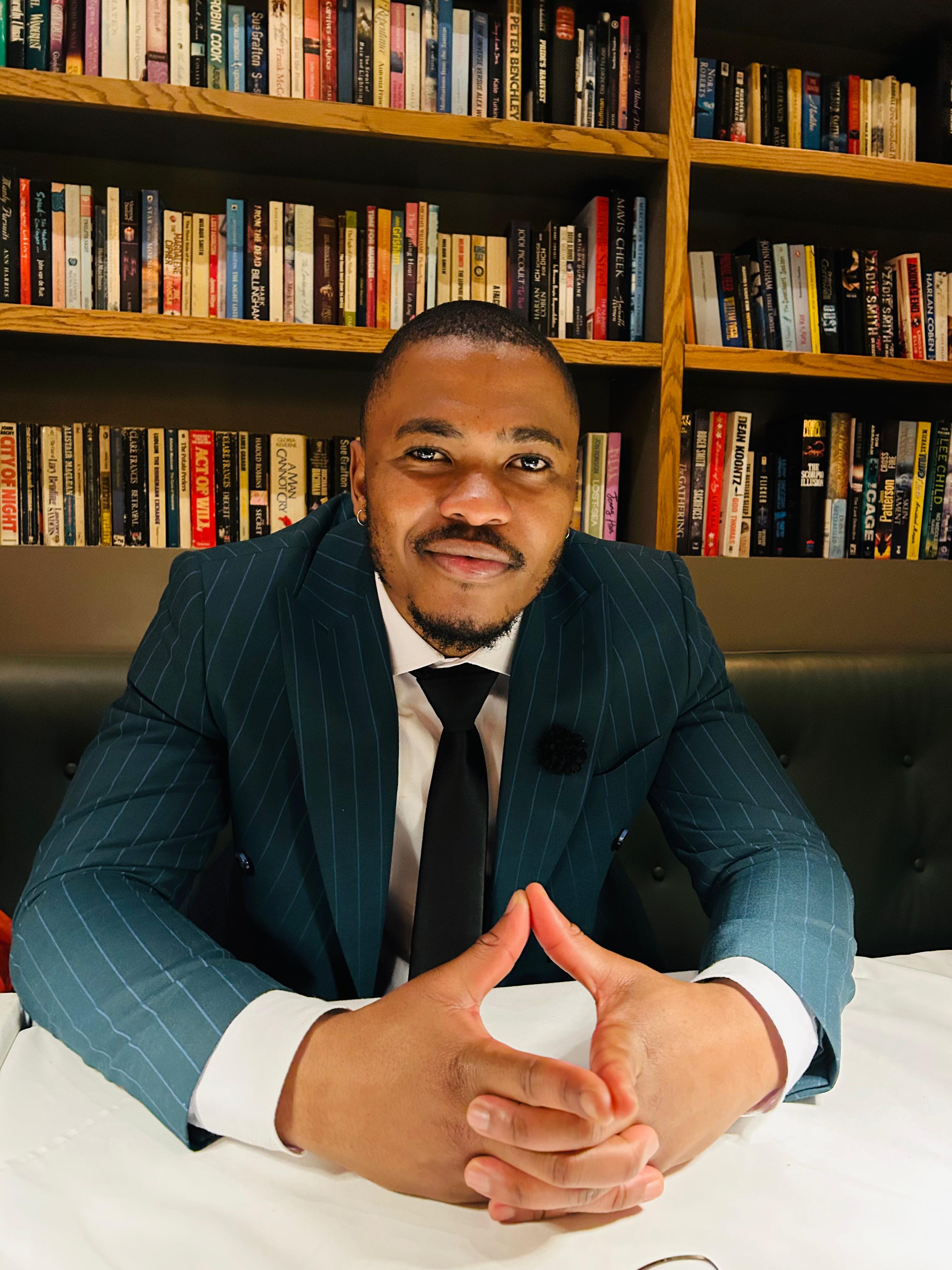
I hold a Master's in Computer Science with distinction and a Bachelor's in Electrical and Computer Engineering with Honors. Recently, I was honored with the Best Paper Award at GECCO 2023 and the University of Cape Town's Best Postgraduate Paper Award 2023.
My MSc thesis, "Body and Brain Quality-Diversity in Robot Swarms," focused on developing evolutionary swarm algorithms for optimal cooperation in resource foraging. This work gave me hands-on experience in programming robots and analyzing how groups behave collectively.
Now, as a PhD candidate, my research delves into the benefits of behavioral heterogeneity in robot swarms, with my first project exploring the geometry of decision-making in such systems. I'm passionate about uncovering how diversity in behavior can lead to smarter, more adaptable robotic groups.
With a strong interdisciplinary background in complex systems and effective communication skills honed through seminars and publications, I thrive on sharing knowledge and ideas with diverse audiences.
Download CVJune 2024 - Present
Duties: research planning and implementation, teaching, and cross-functional responsibilities.
December 2023 - May 2024
Duties: hardware design and development, software design and development, and cross-functional responsibilities.
February 2024 - April 2024
Duties: general course administration, grading class tests, assignments, and exams.
June 2024 - Present
Thesis Topic: The Benefits of Behavioural Heterogeneity in Robot Swarms. Investigates how behavioral heterogeneity can improve the performance of robot swarms.
January 2021 - June 2023
Thesis Topic: Body and Brain Quality-Diversity in Robot Swarms. Investigates novel artificial life methodologies for demonstrating various swarm robotic systems as autonomous and adaptive collective behavior systems.
March 2017 - December 2020
Culminating Project: Simulating Swarm Behavior for Surrounding a Target.
Papers and thesis hosted directly on this site for quick viewing and download.
Conference Article
This study explores automated damage recovery mechanisms in legged robots using evolutionary algorithms.
Journal Article
Extended journal version of the work on evolving morphology and controller diversity in robot swarms.
Conference Article
This study evaluates the impact of morphological diversity on evolving morphology and controller diversity in robot swarms.
MSc Thesis
Master's thesis on quality-diversity methods for jointly exploring robot morphology and swarm behavior.
Bachelor's Thesis
Bachelor's thesis on simulating swarm behavior for surrounding a target.
Here are some of my favorite projects I have done lately. Feel free to check them out.



The aim of this project was to connect ROS2 with the ARGoS simulator. Specifically, the goal was to enable writing controllers in ROS2 such that sensor data is read from ARGoS, sent to ROS2, and then appropriate control commands are transmitted to the actuators of robotic agents in ARGoS, all based on the use of topics and subscribers.

This project makes use of and extends the open source Robogen platform for the simulated co-evolution of collective behavior and morphology.

Implements distributed control for a swarm of robots that have a goal of surrounding a static target. The algorithm used is based on a local communication strategy. The robots are simulated in a 2D simulator called Player. Robot model files for the simulator are included.
This project uses a WASM module to perform spectral analysis on satelite data. The WASM module is generated from MATLAB code - via a few transformation steps. A web-app is created to demonstrate the WASM module.

PA Smoothing filter by using a Finite Impulse Response (FIR) and a Low Pass Filter (LPF) algorithm. The hardware used is a NEXYS A7 Field Programmable Gate Array (FPGA) programmedin Verilog.

Part of our novel ontology-driven software architecture for natural language generation for Nguni languages involves the capability to specify templates and to verify correctness thereof. ToCTeditor is a tool that will make it easy to specify the templates, given the model for template specification ToCT.
 Geoff Nitschke
Associate Professor, UCT
Geoff Nitschke
Associate Professor, UCT
Sindiso is dedicated, hard working and enthusiastic about research, with a propensity to learn varied new skills, enabling him to constantly produce research of a quality above and beyond expectations. This is attested by his paper in the 2023 Genetic and Evolutionary Computation Conference, which also won the best paper award for the Swarm Intelligence and Ant Colony Optimisation track. The excellence of his research work is also supported by a comprehensive masters thesis that explores cutting edge research topic of the role of body-brain evolution in the context of swarm-intelligence (swarm robotics) systems, and with important implications for the automated design of future swarm-robotics systems. In summary, I highly recommend Sindiso given his exceptional talent for research and capacity for problem solving and rapidly learning new technical skills, languages and methodologies.
 Malan Ruppert
Senior Engineer, VASTech
Malan Ruppert
Senior Engineer, VASTech
Sindiso participated in two distinct 4 week internship programs at VASTech, during which I had the pleasant experience of mentoring his projects. The projects required the integration of a wide range of technologies, including developing and building modules in C++, WebAssembly and JavaScript, and utilizing cross-platform serialization libraries to glue things together. Sindiso demonstrated immense self-motivation and competency, a passion to consume and make sense new knowledge, and the ability lay out structured step-by-step approaches for himself to tackle project requirements. Both projects ended with a presentation of work to various company members, which he conducted professionally and with confidence. It is guaranteed that Sindiso will be a valuable addition to any engineering team.
I love to hear from you. Whether you have a question or just want to chat about design, tech & art — shoot me a message.